Merry Imperfect, Perfect, Christmas

At last, Christmas is upon us. Whether you are reading this before or after Mass, between visits, in a rare quiet moment, or at the end of a long day, know that you have a place in this parish family.

Most of us have watched enough Hallmark Christmas movies to last a lifetime. The cocoa is perfect, the snow falls on cue, every problem is wrapped up in 90 minutes, and the town square always looks like a postcard. Bethlehem did not look like that. Real life does not look like that either.

Imagine Mary in the real Bethlehem of 2,000 years ago: a brand new mother in a rough place, tired, probably a little nervous, holding the Child an angel once promised her. Joseph is doing his best with what they have. It is holy, yes, but also simple, very human, and a little messy.

Right there, in that ordinary scene, God chooses to step into our world and into our chaos with a love no movie can touch. Mary “treasured all these things and pondered them in her heart,” not because everything was perfect, but because God was truly with her (Luke 2:19).

So maybe this Christmas your life feels more like that real Bethlehem of long ago than a Hallmark movie. Schedules are crowded, loved ones are missed, budgets are tight, or the house looks more “lived in” than “Instagram-ready.” And yet, into exactly that kind of life, Jesus is born.

The Gospel tells us that the angel’s message was “good news of great joy that will be for all the people,” and “to you is born this day in the city of David a Savior, who is Christ the Lord” (Luke 2:10–11). That promise of joy, peace, and saving love is meant for hearts like ours, right here and now.

And the story does not stop at the manger or in Bethlehem. We are not only invited to receive this hope, but also to share it, carrying the news that Christ is born into our families, workplaces, and neighborhood streets, especially to those who feel forgotten or overwhelmed this year. The love we quietly experience in prayer and in the Eucharist, and yes, especially on Christmas Day, is meant to overflow in kindness, forgiveness, and concrete care for others. Like the carol “Go, Tell It on the Mountain” reminds us, this good news is too great to keep to ourselves, a message to carry “over the hills and everywhere” so that others may know that Jesus Christ is born.

Thank you for all the ways you have already done this in our parish this year: your generosity to those in need, your presence at Mass, your patience with one another, your quiet acts of service that nobody applauds but heaven notices. You are remembered at the altar this Christmas and held in the prayers of your priests and parish staff.

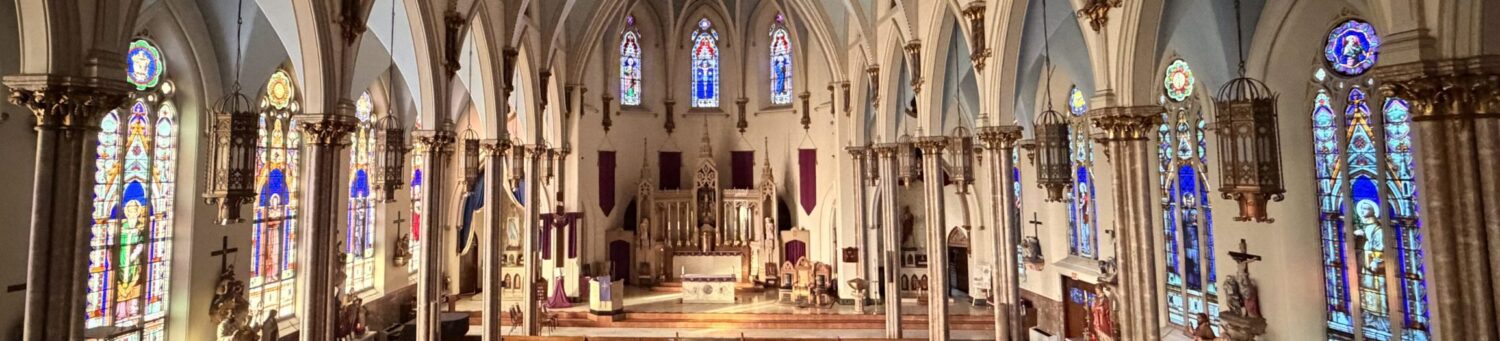
So yes, from the heart of Sacred Hearts – St. Stephen Parish, the most beautiful parish in Brooklyn, a very warm and joyful Merry Christmas to you and your loved ones. May you know, deep down, that Christ is born for you, that His peace is stronger than your worries, and that His love is far better than any “perfect” Christmas we could script. May the blessing of the Holy Family rest upon your home, and may this Christmas fill you with a hope you cannot help but share.

A very perfect, imperfect Merry Christmas to everyone.

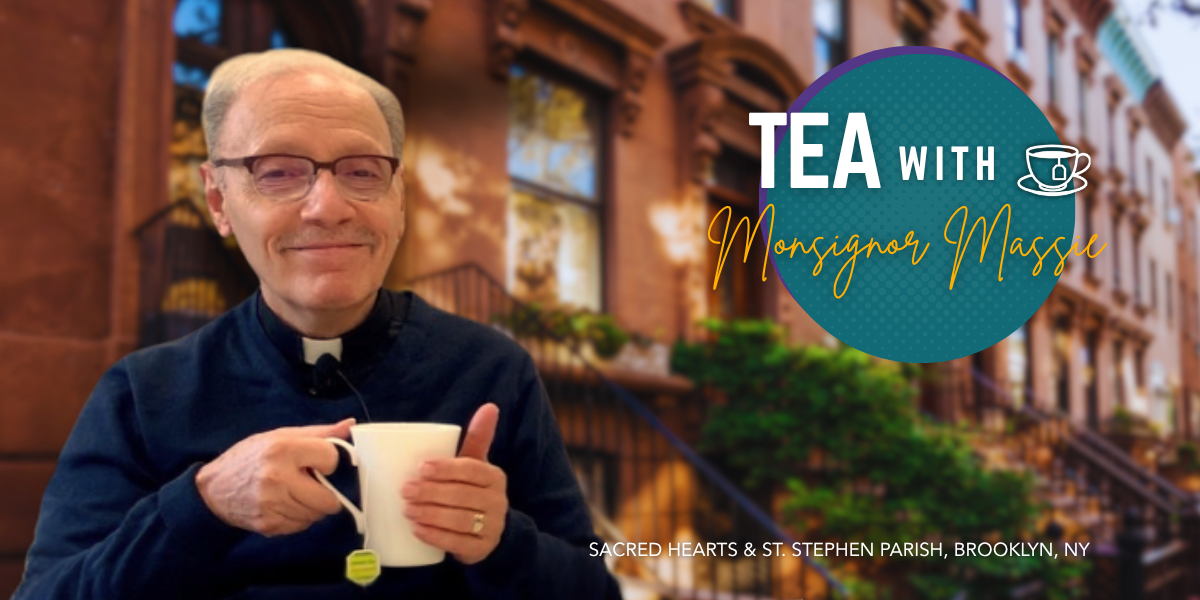
Monsignor Guy Massie and the Parish Staff
Christmas 2025

Feast of the Holy Family

The Nativity Family

The Nativity scene, both outside and inside the church, presents us with a family. Family is the cornerstone of society. We learn how to be human in our family. We learn how to share mutual concern for others and the values by which we construct our respective lives. Family teaches us about loving relationships and mutual responsibilities.

Evolving Definition of Family

The constitution of the family has changed through the years. While family was defined as people who were related by blood, today that definition has expanded to mean all people with whom we have meaningful and loving relationships. Therefore, while family may include all one’s relatives, it may also include friends with whom we have bonded for many years and with whom we share a common life.

Categories of Families

There are many categories of families. There is our immediate family of mom, dad, and brothers and sisters. There is our work family. There are the people we see every day and with whom we spend most of our waking hours. There is the parish family, which is made of people with whom we worship and with whom we work for the greater good of the community.

Challenges in Relationships

Family is a network of relationships. Relationships can be rewarding and wonderful, or they can be difficult and frustrating. Relationships are complicated, and they need constant work. Forgiveness, understanding, remembering that no one is perfect, remembering that every life goes through difficulties and needs understanding, can help family life.

Importance of Communication

Communication is most important in families. Communication issues are the reasons for many family struggles. Parent-child relationships, husband-wife relationships, and brother-and-sister relationships often fall or rise over the quality or lack of quality of communication. The ability to listen to each other, to listen to what is said, and react reasonably, is a major challenge for many.

Intergenerational Stress

These issues become more acute as we are now seeing intergenerational living together. The caring for children and, at the same time, the caring for aging grandparents adds more stress to family life. Hurts come frequently in families because it is usually those you love the most who hurt you the most.

Foundations of Family Life

Family is important. For the sake of family life, the struggle to make peace based on truth and understanding is paramount. While family life has changed through the years, the way to maintain a family has not. Love, mercy, forgiveness, and sharing a common life are foundations of family life. For the family to survive, we all need to see ourselves as part of the community of family and not as independent individuals.

Reflection

What is your most challenging family issue? What is your most rewarding family issue? Both challenges and rewards make us a family.

Msgr. Guy A. Massie
December 28, 2025

Mary, Model of Faith on the Fourth Sunday of Advent

Sunday is the Fourth Sunday of Advent. The readings focus on Mary. Since Christmas is the celebration of the Incarnation (the taking on of flesh) of God among us, Mary is very important. Mary gives flesh to the Word of God.

The reason why Mary holds an important place in Catholic and Orthodox theology and spirituality is her role in the Incarnation. Mary makes God more than a concept; she saves us from a too theological or philosophical approach to God. Through the Holy Spirit, she makes God visible. Mary is one of us. Honored in the Gospel, holding a special place in the Church and in the hearts of the faithful, she is the first disciple of the Lord. She is the first member of the Church. She is not divine but human, yet she is for us a model of faithfulness to the Word of God. She is the Mother of the Faithful.

Mary in Art and Scripture

The world of art has done both a service and a disservice to Mary. Icons aim at preserving her holiness and her motherhood. Various forms of Western art, in an attempt to portray her, sometimes presented us with an image that was too perfect and too distant.

Yet from the sacred text, which is rather silent on Mary, we do have an outline of a strong witness, a woman of prayer who seems down to earth. In Luke 1:34f, we see that she questions the angel. She clearly knows the facts of life. How many of us would question an angel? We find her in Cana being concerned over the couple who has just been married because they have no wine. She moves Jesus to perform a sign. We see her enduring sorrow beyond all imagination at the foot of the cross. She seems to struggle to understand Jesus in Mark’s Gospel (not unlike all souls who seek to follow the Lord).

Mary as Journey Partner in Faith

For me, Mary is an important journey partner in the walk of faith. I see her not as a person reserved for women only, but as a companion for any soul who is longing to live a life in the Spirit of God. Carrying Jesus in her womb or in her heart, she is a sign for me that God is present even when he seems absent and distant.

A woman who went through times of confusion and upsetment, she reminds me that God does have a plan. God is in the many changes that occur in our respective lives. Not unlike a parent who gently reminds us to have patience and wait, she is an example of one who waits on the Lord. She is a sign that God does fulfill his promises.

Mary as Teacher of Prayer

As a sign of prayer, she teaches us that prayer is a matter for the heart. In Luke 2:20, we learn that she kept all the things regarding Jesus in her heart and reflected on them. Perhaps we can imitate her prayer and reflect on the Word of God made flesh, also known as Jesus, all the day of our lives.

Just as Mary brings Jesus to us, she can bring us to Jesus in a real and compelling way. Just as Mary gives flesh to the invisible Word of God, thus making God visible in Jesus, so we too, through practicing of our faith, can give flesh to Mercy, Love, Compassion, Justice, and Peace by the way we choose to live out the Gospel of Christ Jesus.

Together, let us proclaim the greatness of the Lord who is Jesus.

Msgr. Guy A. Massie
December 21, 2025

Joy And Happiness, Are They The Same?

Sunday is the Third Sunday in Advent, we are called to be joy-filled. We light the pink candle on our Advent wreath. What is the difference between happiness and joy? Is there a difference? What if you are not happy, can you have joy?

These are questions that come to mind when celebrating this season and this Sunday.

What Is Joy?

Joy is one of the fruits of the Holy Spirit. Joy has nothing to do with all things going well. Joy has nothing to do with everything being the way you like it. Joy is in the person who sees with the eyes of faith even if those eyes are filled with tears. Joy is an internal disposition.

Happiness is momentary. Happiness has to do with things being to our liking. We are happy when things go the way we have planned. Joy-filled is that in the midst of the things that have been planned and gone wrong, we see hope in the unexpected situations.

If you are mourning the loss of someone, you are not happy. You can be joy-filled in that your loved one may now be seeing the face of God. Joy is more of a choice rather than a feeling. It is a choice made possible through the eyes of faith.

Joy In The Scriptures

The readings invite us to be joy filled. They did not invite us to be happy.

In the first reading from the Book of the Prophet Isaiah we read about the parched desert coming to bloom with flowers. Those who are weak will be made strong. Those who are fearful will be given security, and those who are blind will see. Notice that the promise of joy the reading is making takes root in the midst of their suffering. We might say that the root of resurrection is found in our crosses. The promise that God will deliver us is our joy.

The second reading from the Letter of James urges us to have patience. It is possible that the people to whom James is writing may be experiencing some suffering, if not persecution, for their faith. James urges them to remain faithful. God will not abandon them. Joy comes from hope.

In the Gospel we meet John the Baptist in prison. Notice it is John who hears the news of all that Jesus is doing. John actually did not know exactly what to expect from Jesus. John may have thought that the Messiah would come as a judge. There existed many views of what the mission of the Messiah was to accomplish.

Would the Messiah free the Israelites from the oppression of the Romans?

Would the Messiah be priestly and spiritual?

Would the Messiah be a great teacher?


John had to go through a spiritual conversion. While he was in prison, John had to reevaluate his ideas and his ministry. While he heard that Jesus caused the deaf to hear, the blind to see, the lepers to be cleansed and the dead to be raised, these actions were all messianic signs taken from Isaiah. John sends a question to Jesus from his prison cell. John asks Jesus if he is the one who was to come or should he look for another? John is not sure. Jesus does not answer John’s question. Jesus points to his works and allows John to make his decision.

Is Jesus the Messiah or not?

Choosing Joy In A Broken World

Where does this leave us? The world is not in good shape, our country and city are in a mess. Crime against innocent people seems to be up. Many are seriously ill, family problems for many are overbearing. Many marriages are in crisis. Priestly and religious vocations are also in crisis. The Catholic Church is in the midst of scandals. How can we not help but say with John to Jesus, are you the one

Perhaps Jesus would answer by saying, look at all the good things going on around you. Look at those who are striving to follow the gospel. Look and see the great generosity people have. Look at the good young people who give of themselves as servers in soup kitchens. Look at the many loving marriages that exist, look at the sincere and convicted priests and religious who serve people in the direst of circumstances, look at the many individuals who give of themselves for others.

Yes, there are selfish people, yes, there are hypocritical people, yes, there are people who have made bad decisions which have had a negative effect on us, however, we can choose to be hope-filled and even joy-filled that so many do try to follow the gospel, even if they do not know they are following the gospel.

We all have free will. When we use free will to do good things, life is good for many. If we use our free will to be negative, aggressive, and disregard others, we all suffer. So, I choose joy, and I choose to stand with many who follow the gospel even if we get pushback because in the end, God wins and good triumphs.

Be joy-filled. God is near.

Msgr. Guy A. Massie
December 14, 2025

Advent Hope and Unity

Isaiah, John, and Paul: Messengers of Hope

The Second Sunday in Advent presents us with Isaiah the Prophet, John the Baptist, two important prophets, and Paul. Isaiah is from the Hebrew text and John from the New Testament. All three men bring us a great message of hope and unity. Hope finds its basis in faith in God’s Divine Providence.

In the first reading from the Book of the Prophet Isaiah, we are given the wonderful picture of peace and unity. The reading tells us that the Spirit of God will grant gifts of wisdom, understanding, counsel, and strength. The reading points to a time when natural enemies will actually be friends. The reading expresses the desire of the Prophet for this day of peace and unity. He believes that this peace and unity is possible even if it sounds far‑fetched. The reason for his hope is his faith that God will bring about this Kingdom of Peace.

Scripture Written To Give Hope

In the second reading, St. Paul reminds us that the Hebrew Scriptures, which were written long before the dawning of Christianity, were meant to give hope. Paul encourages the Romans to endurance in harmony, or in unity, with each other. He later mentions the welcome of the Gentiles into the community, thus affecting a greater unity among the Romans.

Therefore, if we look at the first reading in light of Romans 15:4‑9, we can see this great message of hope and unity. In the Gospel, John the Baptist calls us to repentance because the Kingdom of God is at hand. This is a message of hope. The arrival of the Kingdom of God is a fulfillment of hope. The fact that John is calling us to change means we still have time to make things right. This is a message of hope. Reconciliation between God and humanity and between each of us is a great sign of hope and unity.

A Divided World In Need Of Peace

In our day we are witnessing many divisions in society. In some places, there is a divide between people because of race, color, economic background, religion, or orientation. We are even divided by our political views. Some of us are even separated from our inner selves. We are not at peace in our hearts. We are not satisfied, but we do not know what we really want.

Sometimes our hearts are divided from our minds. Sometimes we are inwardly divided between what we must do and what we want to do. Is this right? God comes to gather us into his Kingdom, not to scatter us. In fact, the word “devil” means one who divides. Unity brings hope, recognition of human dignity and human worth. Unity helps us all to sing God’s praises together in different ways, with different words, but united. Can we hope in God’s Divine Providence working through us? Can we incarnate the words of Christ and work towards a greater unity of our family, workplace, and neighborhood?

Choosing To Be Hope‑Filled

Even if you do not see the sun, it does not mean the sun is not shining. If God seems absent, this does not mean he is not present. Let us be still and know that God is. This may bring us hope and peace. Let’s choose to be hope‑filled rather than angry, negative, or resentful. Hope will bring us to a place of peace.

Msgr. Guy A. Massie

December 7, 2025
Readings for the Second Sunday of Advent

Advent 2026: The Coming of the Kingdom

Happy and Blessed New Liturgical Year 2026!

Sunday marks the first Sunday of Advent, the beginning of a new liturgical year in the Church. The word Advent means “coming.” This season centers on the Coming of the Kingdom of God and God’s coming to us through the Incarnation of Jesus, the Second Person of the Blessed Trinity.

The liturgical color for Advent is violet. While Advent calls us to prepare through penance, its primary focus is joyful expectation that God will fulfill His promises. Waiting is the key activity of this season. We all wait in life—sometimes with joy, frustration, acceptance, or resentment. When we wait for God to act, we are confident that God will keep His promises, even if it takes time.


Two Parts of Advent

Advent has two distinct parts:

  • Today through December 17: The focus is on the Second Coming of Christ, the arrival of the Kingdom of God, the end of the world as we know it, and the establishment of God’s reign.
  • December 17 through Christmas: The focus shifts to the Incarnation of God among us in Jesus Christ. Jesus Himself is the Kingdom of God among us.

In fact, it is Jesus who is the Kingdom of God among us. The Kingdom of God among us will be characterized by peace. In the first reading from the Book of the Prophet Isaiah, we read:

“In the days to come the mountain of the Lord’s house shall be established as the highest mountain… all nations will stream toward it… they shall beat their swords into plowshares and their spears into pruning hooks.”

This promise of peace is given to a people amid war, rebellion, and frustration. Who among us does not long for peace in the world and in our hearts and minds? This fullness of peace is promised to us.


A Christian View of History

The second reading reminds us that the end of time is nearer than we once believed. Christian history is like a spiral: although we relive the Mystery of Christ Jesus in yearly celebrations, we are moving through time—from the Incarnation toward the return of Christ.

Christ is the Alpha (the beginning) and the Omega (the end) of our history, and we are moving toward our Omega point. The Letter to the Romans tells us:

“You know the time… for our salvation is nearer than when we first believed.”

Thus, if this is true that Christ is near at hand, the letter urges us to live as people of the gospel. How do you prepare to meet God? How do you know the time of your own end? 

The Gospel tells us that the Lord may return at the time we least expect. In short, be prepared.

We believe in the Resurrection of the dead and the life of the world to come. (The Creed)

Come, Lord Jesus, set us free.

Monsignor Guy A. Massie
November 30, 2025
Readings for the First Sunday in Advent