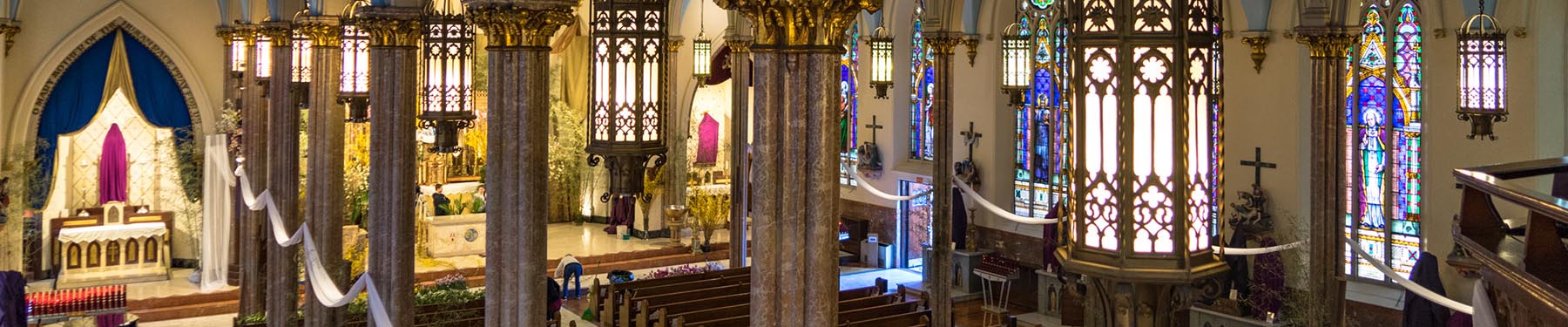
A Season of Hope and Renewal
Lent is a great season of hope. It is the time of the year when the earth itself is preparing for new life.
Lent is a call to renewal of our spirits, our lives, and our very being. Lent is a time to grow in our personal relationship with Christ through scripture readings and reverent reception of the Eucharist. It is time to know the Lord in a deeper and more meaningful way. So let us try to move from cultural Catholicism to convinced Catholicism.
The Practices of Lent
The practices of Lent are motivated by renewal and hope. Fasting and abstaining from food are ancient Lenten practices. Fasting is found in many Christian and non-Christian communities for both spiritual growth and social justice awareness.
Fasting means not eating. This can be done in many ways. One may fast from eating in between meals. One may fast from eating a particular food for a period of time. For example, one may fast on bread and sweets, etc. The fasting need not be a painful experience.
The purpose of the self-denial is to remind you that Christ gave up his life willingly for you. This fasting you are doing is to gently remind you of this article of our faith. Secondly, fasting can help the poor. The money saved from fasting, which you otherwise might spend, can be given to the poor or given to help someone else.
Above all, your Lenten practices should move your prayer life to be more Christ-centered and more merciful to others. If this is not happening, change your prayer routine.
Church Requirements for Fasting and Abstinence
To help you with the Fasting and Abstinence, the Catholic Church requires all age 14 and over not to eat meat on all Fridays of Lent. This is to remind us of the death of Christ on a Friday. Those ages 14 to 59 are asked to fast on Good Friday and Ash Wednesday. This means that one may eat one main meal. Good Friday is a day of Fasting and Abstinence.
Positive Acts for Lent
While fasting is commendable and should be done, I also urge you to do positive acts for Lent. This is a season that invites us to make room for God in our busy lives. It is time to pray in new ways.
I may suggest that you pray the Stations of the Cross, perhaps two stations a week until Easter. While focusing on the sufferings of Christ, ask yourself where you may be in this particular situation. For example, the first station Jesus is condemned to death. For a meditation, think of acceptance of things and situations that we cannot change. How difficult acceptance of loss or change can be.
Another meditation, have you or someone you know suffered an injustice? Has someone you know been condemned to death due to cancer or a terrible sickness, which is unfair? If so, then you have found your prayer for this first station of the Cross.
I suggest reading Sacred Text. Perhaps read the Lenten Gospels proclaimed each day. At Mass during Lent this will keep you in line with the praying Church. As you read, ask yourself where am I in this gospel? What stands out in this gospel for me? Sit with the Gospel for ten minutes a day. It will be a great experience.
Adoration of the Blessed Sacrament
I highly recommend that you join the Parish on the days we have ADORATION OF THE BLESSED SACRAMENT. The Blessed Sacrament is the real presence of Christ with us. I ask you to take time to sit in silence in the presence of the Lord.
Allow this mysterious and wonderful sacrament to contemplate you, and you contemplate the Lord. Adoration of the Sacrament will make the celebration of the Eucharist more meaningful. Allow this to be a time of Growth for your Spirit.
I wish you a fruitful Lenten Season.
Msgr. Guy A. Massie
February 15, 2026